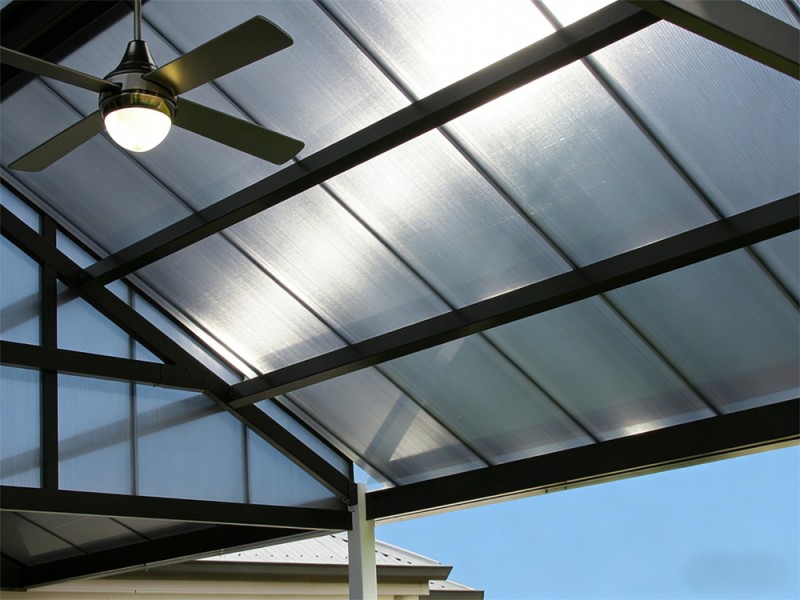
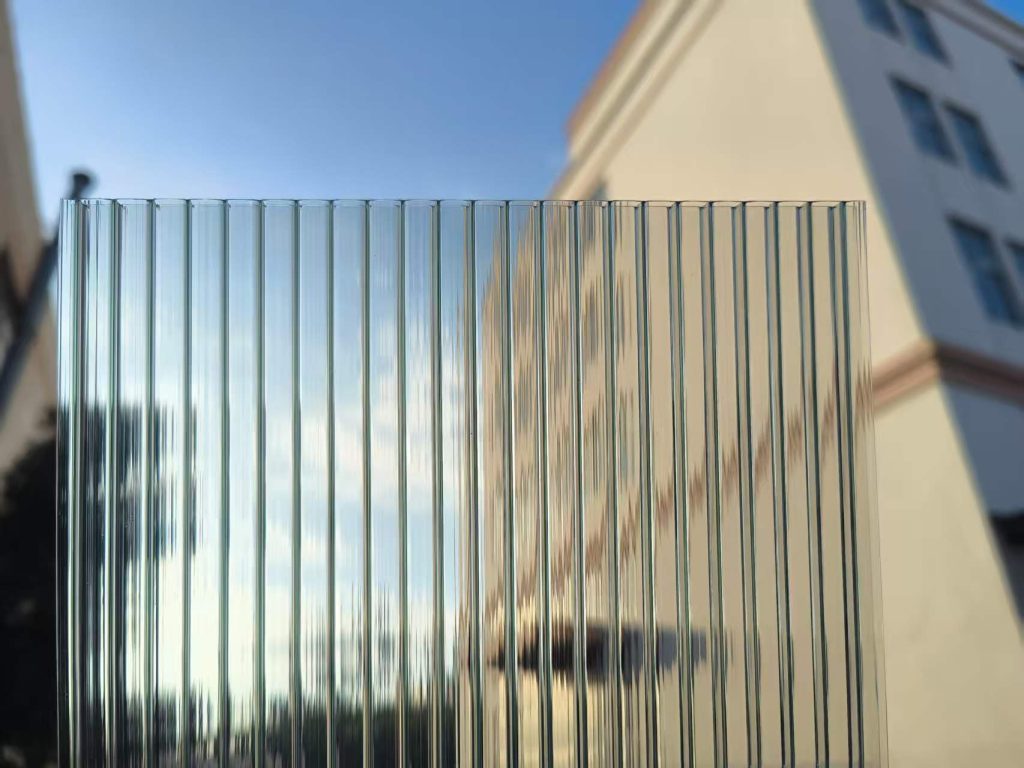
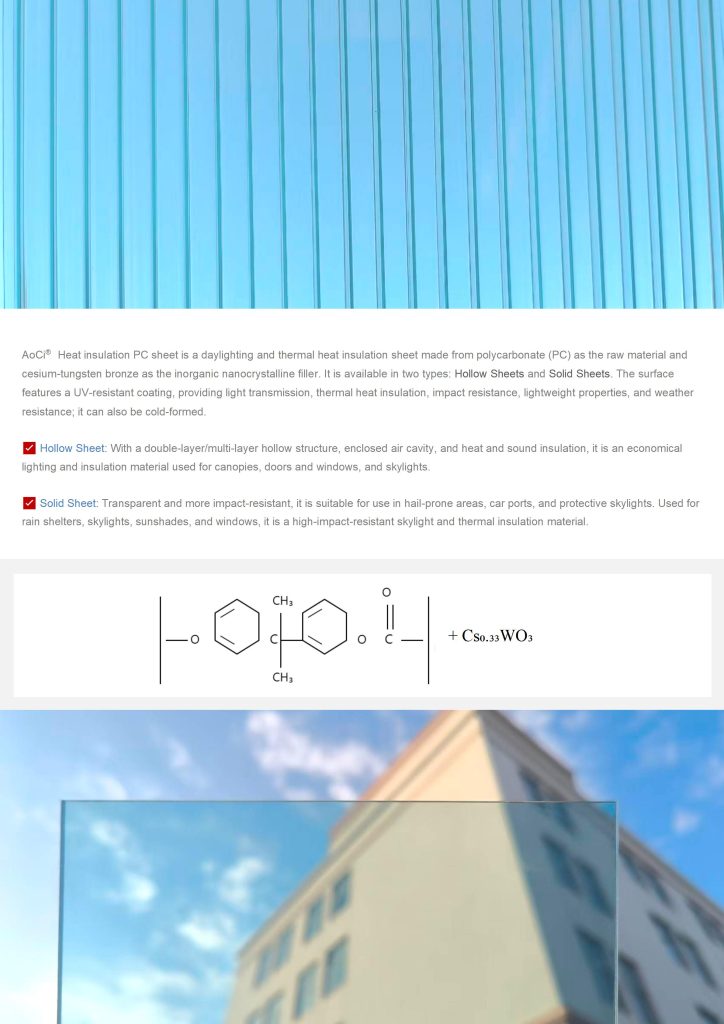
Heat-insulation polycarbonate (PC) sheet is a daylighting and thermal-insulating building material, manufactured with polycarbonate as the base matrix and inorganic nanocrystalline cesium-tungsten bronze (Cs₀.₃₃WO₃) as the functional filler. It falls into two major categories: hollow PC sheets and solid PC sheets, both coated with a UV-resistant surface layer to deliver balanced performance in light transmission, thermal insulation, impact resistance, low weight, weather resistance and cold-formability.
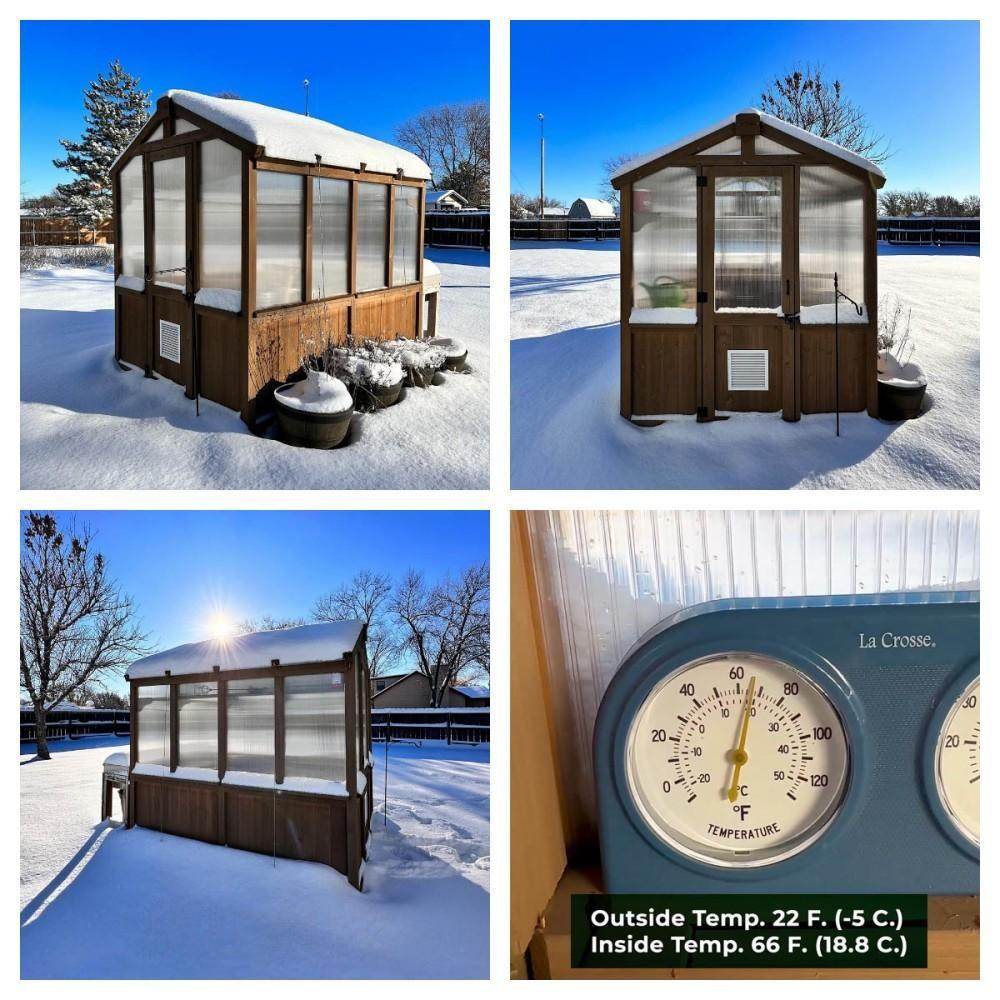
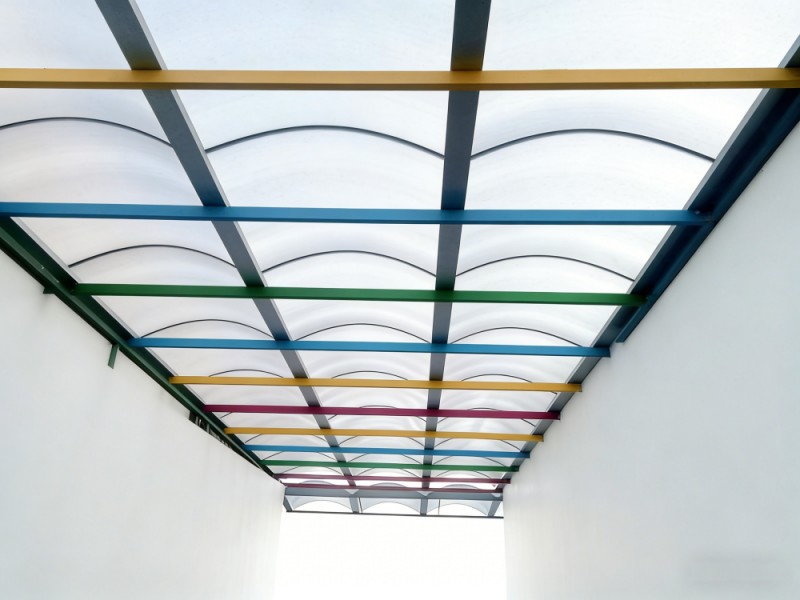
The hollow sheet adopts double- or multi-layer hollow cavity structures for combined heat and sound insulation. It serves as a cost-effective option for canopies, windows and skylights. The transparent solid sheet boasts superior impact resistance, making it suitable for hail-prone regions, carports and protective skylight projects such as rain shelters and sunshades.
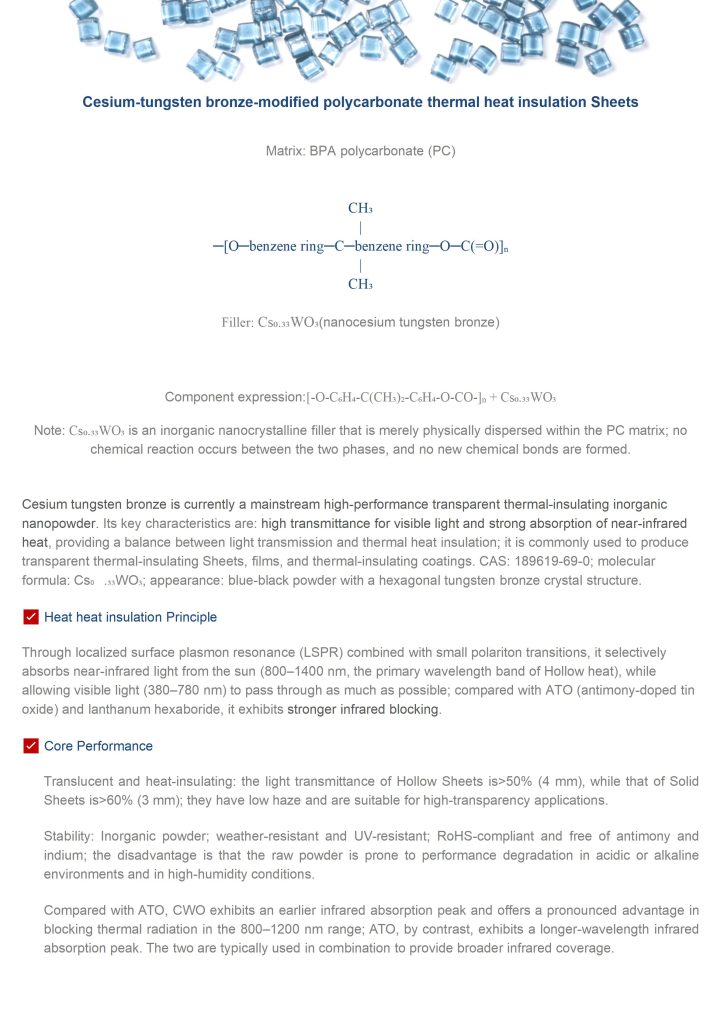
Cs₀.₃₃WO₃, a blue-black hexagonal-crystal inorganic nanopowder, is physically dispersed within the PC substrate without chemical bonding reactions. Leveraging localized surface plasmon resonance and small polariton transitions, it selectively absorbs near-infrared solar radiation (800-1400 nm) while permitting high visible-light transmittance (380-780 nm). It outperforms antimony-doped tin oxide (ATO) in blocking 800-1200 nm thermal infrared rays. This material complies with RoHS standards and contains no antimony or indium; nevertheless, its performance may degrade under acidic, alkaline or high-humidity surroundings.
Core Test Performance
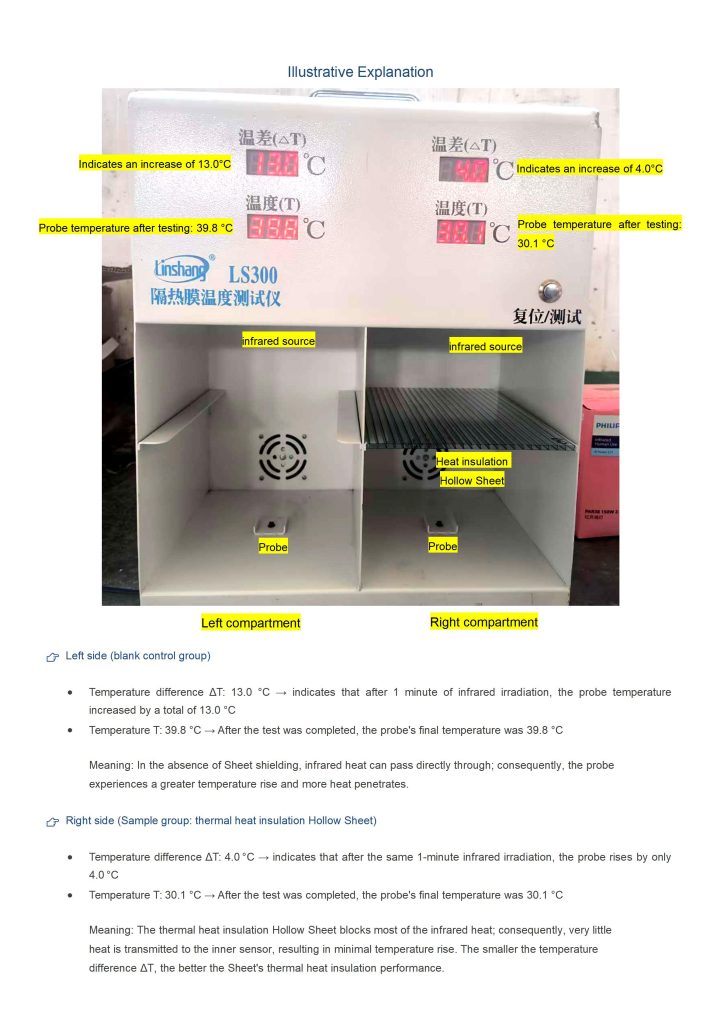
Tests are conducted with LS116 transmittance meter and LS300 thermal-film temperature tester (150 W Philips infrared lamp). Thermal barrier index formula: Thermal barrier index ≈ (blank temperature difference ΔT₁ − sample temperature difference ΔT₂) ÷ ΔT₁ × 100%.
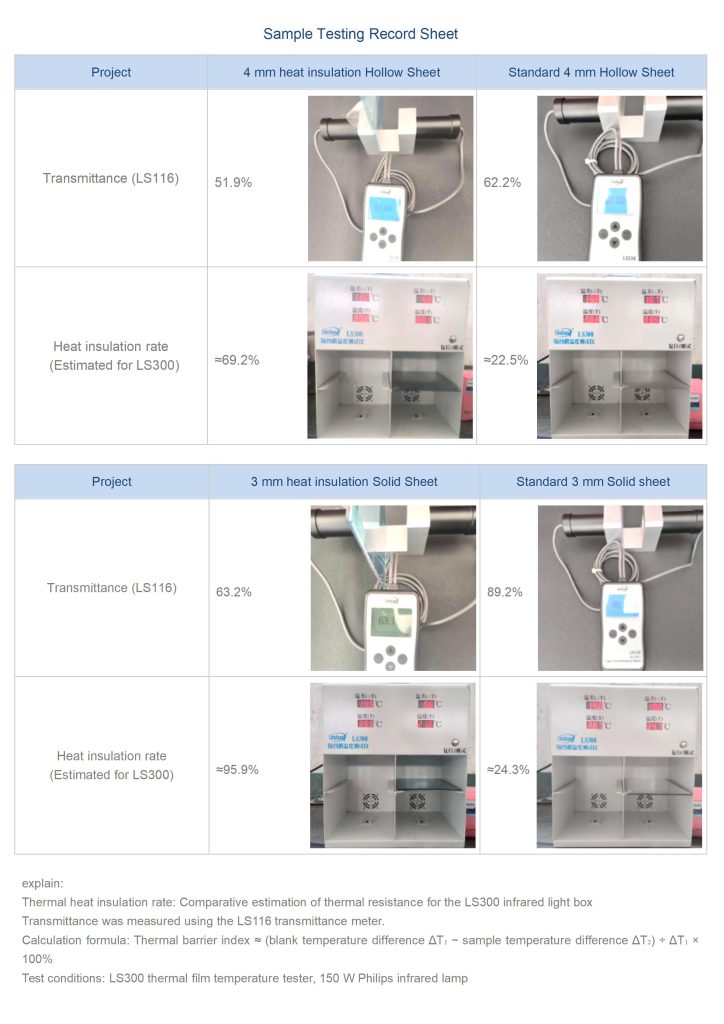
| Item | 4 mm heat–insulation Hollow Sheet | Standard 4 mm Hollow Sheet | 3 mm heat–insulation Solid Sheet | Standard 3 mm Solid Sheet |
| Light Transmittance (LS116) | 51.9% | 62.2% | 63.2% | 89.2% |
| Thermal Insulation Rate (LS300 estimated) | ≈69.2% | ≈22.5% | ≈95.9% | ≈24.3% |
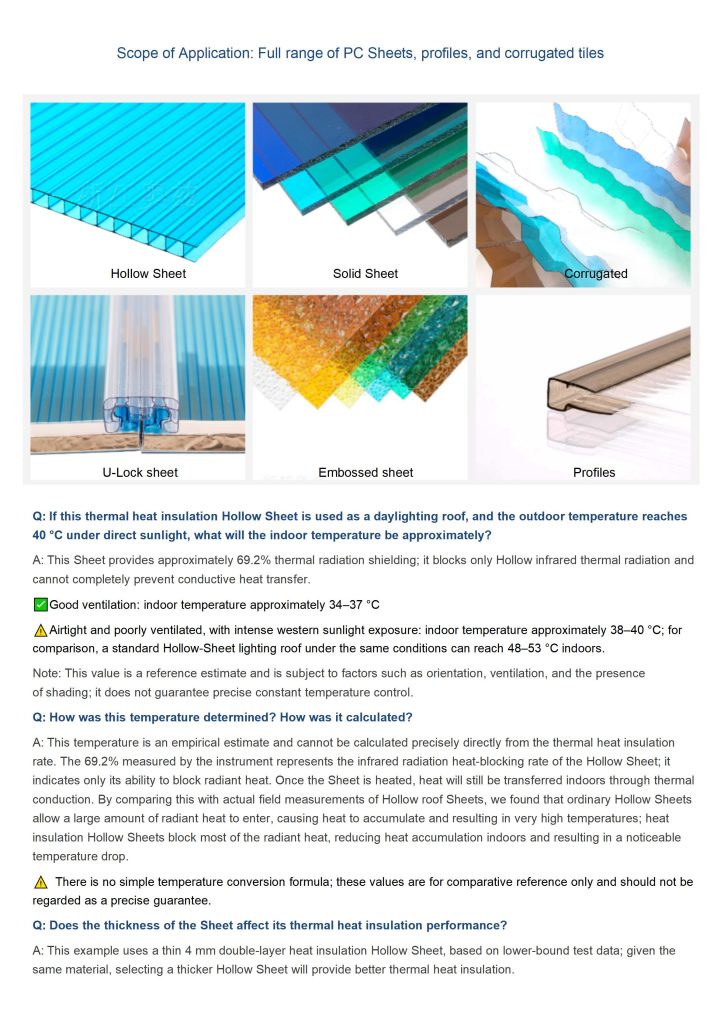
Simulated Practical Indoor Temperature (outdoor 40 ℃ under direct sunlight, 4 mm insulated hollow daylighting roof)
| Condition | Approximate Indoor Temperature | Reference: Standard Hollow Sheet Roof |
| Good ventilation | 34-37 ℃ | 48-53 ℃ |
| Airtight & poorly-ventilated, intense west-facing solar exposure | 38-40 ℃ | 48-53 ℃ |
Note: Temperature values are empirical field estimates rather than theoretically calculated fixed values. The sheet blocks radiant infrared heat but cannot fully prevent conductive heat transfer. Actual results are affected by orientation, ventilation and shading. Thicker hollow sheets of the same material deliver better thermal insulation performance.
Installation & Storage Specifications
- Storage: Keep sheets in cool-dry conditions; avoid sun exposure, rain soaking and direct contact with concrete ground.
- Sealing: Only neutral silicone sealant is permitted; acid-alkaline glass glue voids product warranty.
- Fastening: Pre-drill holes 4 mm larger than screw diameter to accommodate thermal expansion. Screw holes shall sit ≥30 mm away from sheet edges, paired with dedicated waterproof gaskets. Screws shall not be directly driven into panels; curved sections cannot be surface-fixed by screws.
- Service environment: Prevent direct contact with concrete, brickwork, acidic or alkaline substances and corrosive gas.
- Protective film: Peel off protective film right after installation to avoid film ageing.
- Cutting & cleaning: Cut using circular saws, jigsaws or utility knives and clear cutting dust. Clean with rainwater or non-corrosive diluted household detergent; prohibit dry wiping to avert surface scratching.
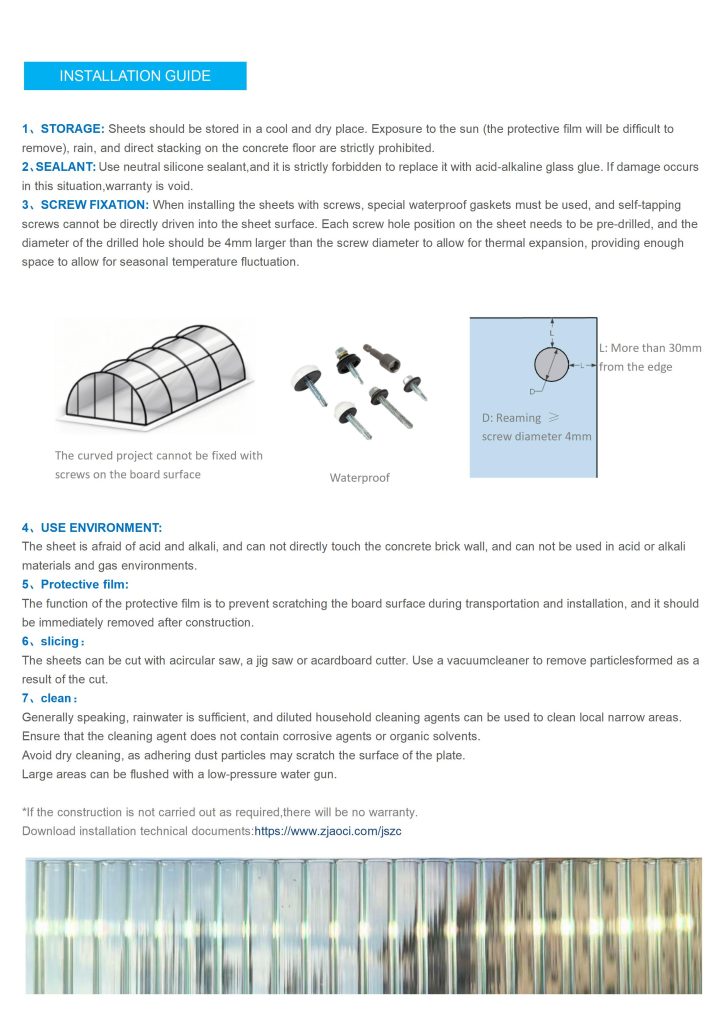
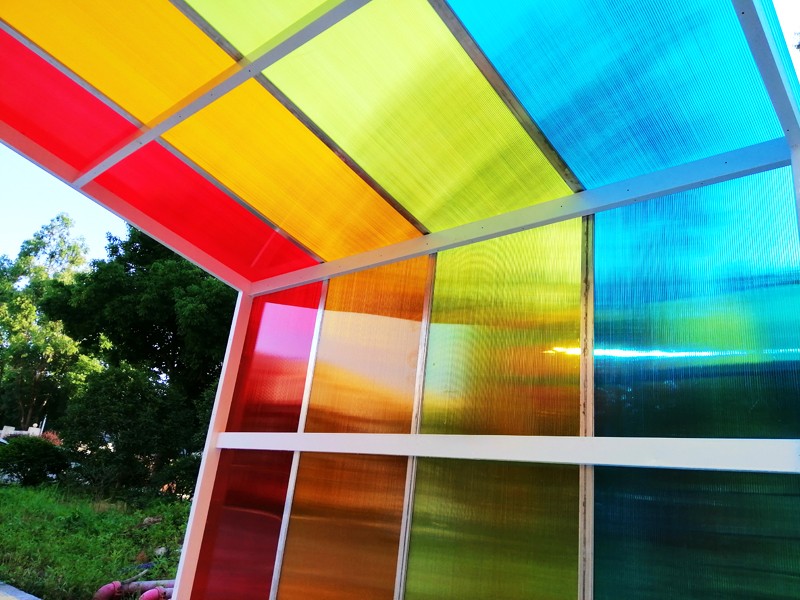
Non-compliant installation invalidates warranty. Relevant technical documents are available for download from the official website. This modified PC material can also be processed into profiles and corrugated tiles for diversified building daylighting applications.