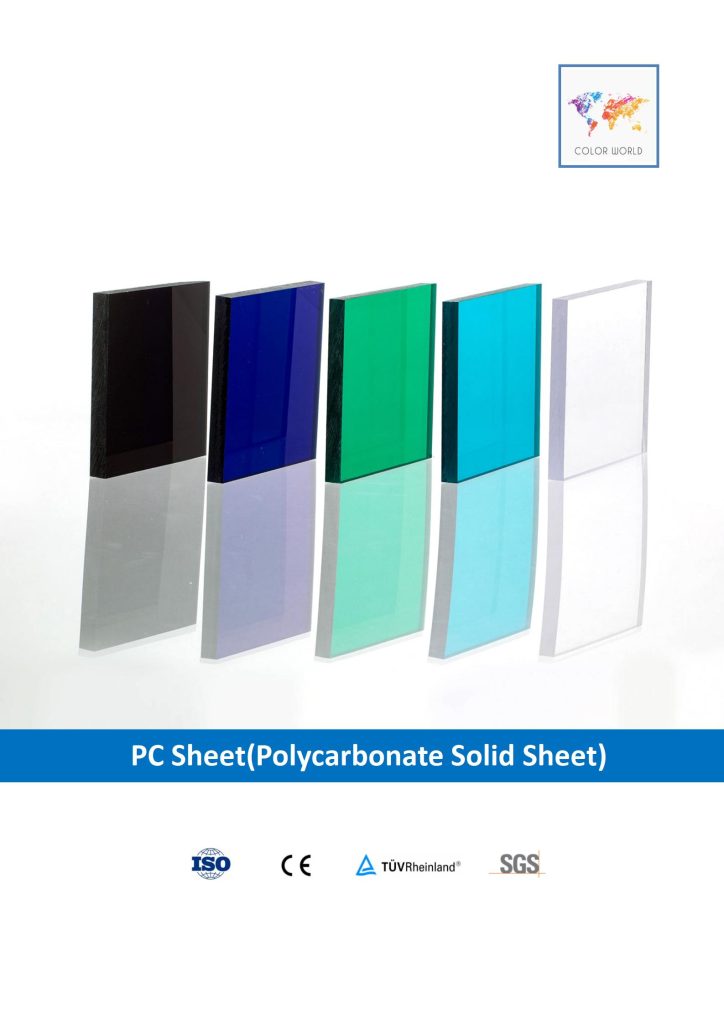

The Significance of Double‑Sided UV‑Coated Polycarbonate Solid Sheet
Polycarbonate solid sheet features outstanding comprehensive performance including high‑impact resistance and excellent thermal insulation, so it is widely adopted in outdoor scenarios such as sunrooms, carports and rain shelters. Many end‑users report that certain Polycarbonate solid sheet products fail to reach the service life promised by manufacturers, and suffer from yellowing, ageing and embrittlement during field service. Such deterioration is primarily triggered by ultraviolet radiation damage.
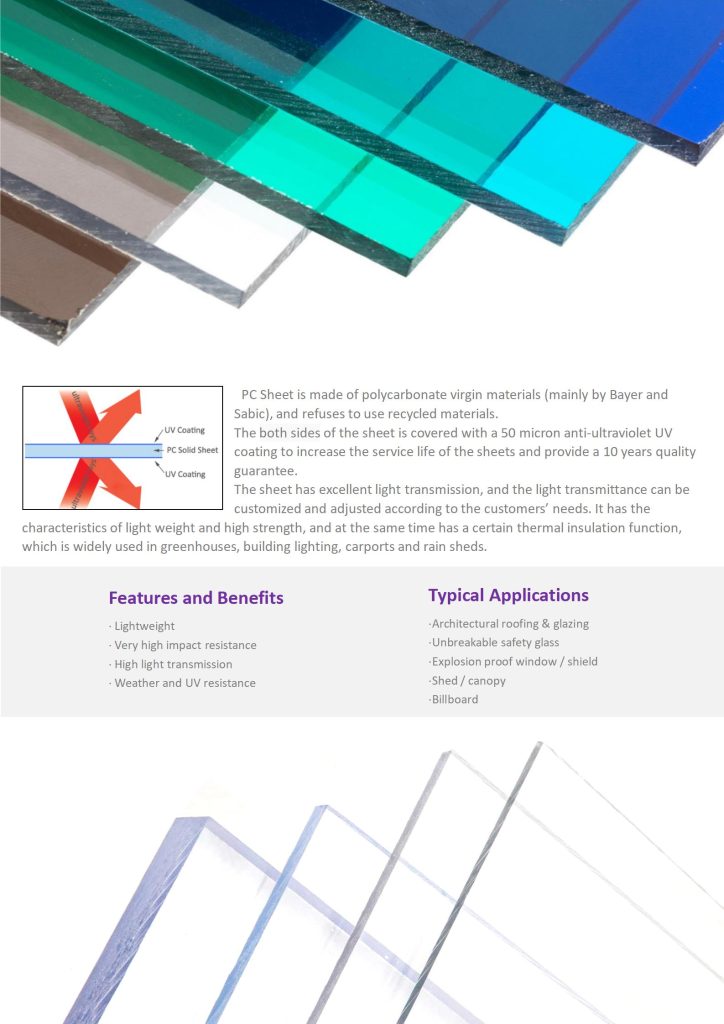
Ultraviolet rays in natural sunlight reach materials via two transmission pathways: approximately 60 % comes from direct solar irradiation, while the remaining 40 % originates from diffuse reflection. Building facades, glass curtain walls, asphalt pavements and airborne dust particles all reflect and scatter ultraviolet radiation. Consequently, the underside of shelter structures is also subject to continuous ultraviolet erosion. For Polycarbonate solid sheet protected with UV coating only on one side, the uncoated rear face will undergo accelerated ageing under reflected ultraviolet exposure when deployed outdoors. Polycarbonate solid sheet manufactured with double‑sided UV coating effectively mitigates this defect for outdoor installations including sunrooms and rain shelters.
Double‑sided UV‑protected Polycarbonate solid sheet is produced on dedicated double‑sided UV coating production lines. A uniform high‑density UV‑protective layer with a thickness of 50 μm is applied onto both sheet surfaces through complete plasticizing of the UV‑resistant coating layer. Compared with boards produced by simple blending‑extrusion processes, double‑sided UV‑coated sheets deliver superior anti‑ultraviolet performance and can achieve a service life of more than 15 years under outdoor operating conditions.
Adopting film co‑extrusion coating technology enables independent yet firm bonding between the UV‑protective film and the Polycarbonate substrate layer. This structural separation allows the base Polycarbonate material to retain its theoretical maximum impact‑resistant capacity. The impact strength of finished sheets can reach 20 times that of tempered glass; no cracks will occur when a 3‑kilogram hammer strikes the sheet from a 2‑metre height. Double‑sided UV‑protected sheets maintain high impact resistance and fracture resistance throughout their service cycle. For rain shelter and canopy applications, such mechanical performance provides reliable protection for personnel and property underneath and reduces safety hazards caused by falling objects.
Extended Professional Analysis
Principles of UV Degradation for Polycarbonate Solid Sheet
Polycarbonate molecular chains contain carbonate groups. Continuous ultraviolet photon bombardment breaks chemical bonds, triggering photo‑oxidative degradation. Macroscopic manifestations include surface chalking, progressive yellow discoloration, reduction in light transmittance, drop in notched impact strength, and eventual brittle fracture. Direct sunlight is not the sole threat: diffuse and reflected ultraviolet radiation from surrounding environments imposes long‑term cumulative ageing stress on the reverse side of shelter panels. Single‑sided UV‑coated sheets leave the back surface unguarded against reflected UV radiation, leading to unexpected early failure even when the front face faces away from direct sunlight.
Technical Differences Between Coating and Blending Anti‑UV Solutions
Two mainstream technical routes exist to enhance the ultraviolet resistance of Polycarbonate solid sheet: surface coating and bulk UV‑absorber blending.
Bulk blending disperses UV‑absorbing additives within the entire Polycarbonate substrate. As weathering proceeds, UV absorbers gradually decompose and consume across the whole material volume. Once additives are depleted, anti‑ultraviolet capability disappears. The additive proportion is also constrained, since excessive addition will compromise the mechanical properties and transparency of Polycarbonate solid sheet.
Surface double‑sided film‑extrusion coating forms a dense, concentrated UV‑shielding layer on both top and bottom surfaces. The UV‑resistant layer serves as a sacrificial protective barrier. The core Polycarbonate substrate remains chemically untouched, preserving intrinsic high‑impact mechanical properties. A coating thickness of 50 μm per side is regarded as the qualified benchmark for long‑term outdoor‑grade sheets. Insufficient coating thickness or uneven coating distribution will greatly shorten the expected service lifespan.
Practical Engineering Selection Guidance
- For outdoor applications such as sunrooms, carports, overhead rain shelters and daylighting roofing, double‑sided 50 μm UV‑coated Polycarbonate solid sheet shall be prioritized. Single‑sided UV‑coated sheets are only fit for indoor or fully‑shaded conditions without reflected ultraviolet exposure.
- Verify coating‑related specifications in procurement documents: clarify double‑sided UV coating, single‑side coating thickness, production technology (film‑extrusion coating rather than simple blending modification), and nominal outdoor service life.
- Even high‑quality double‑sided UV‑coated Polycarbonate solid sheet requires standardized installation. Operators should retain protective film until completion of installation; avoid long‑term exposure of protective film under sunlight. Adequate thermal‑expansion gaps must be reserved, and matching EPDM gaskets should be fitted for fastener positions to prevent stress cracking and water leakage.
- Regular surface maintenance helps extend service performance: clean sheet surfaces with neutral detergent and soft fabric. Abrasive cleaners, hard brushes and strong solvents are prohibited, as they will scratch or corrode the UV‑protective surface.
![[Calculator] PC Solid Sheet Weight & Volume](https://www.polyroofs.com/wp-content/uploads/2026/06/Polycarbonate-Solid-Sheet2.jpg)
![[Calculator] Wind and snow load](https://www.polyroofs.com/wp-content/uploads/2026/06/Polycarbonate-Canopy-Roof4.jpg)
![[Calculator] coefficient of linear expansion](https://www.polyroofs.com/wp-content/uploads/2026/06/Softlite-PC-Corrugated-Sheet1.jpg)