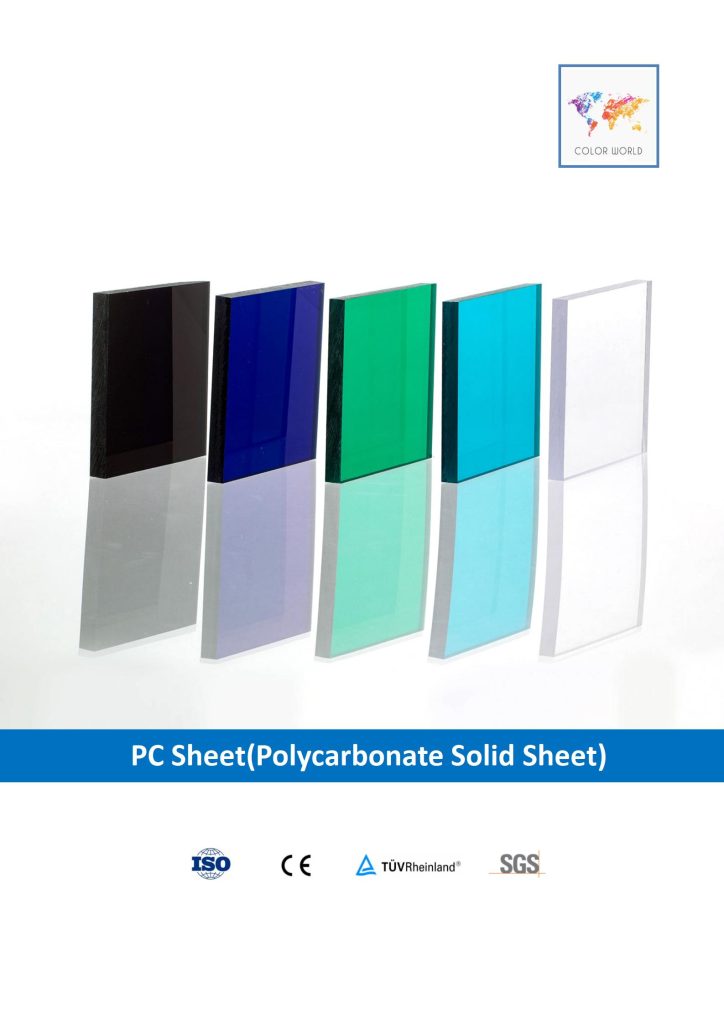
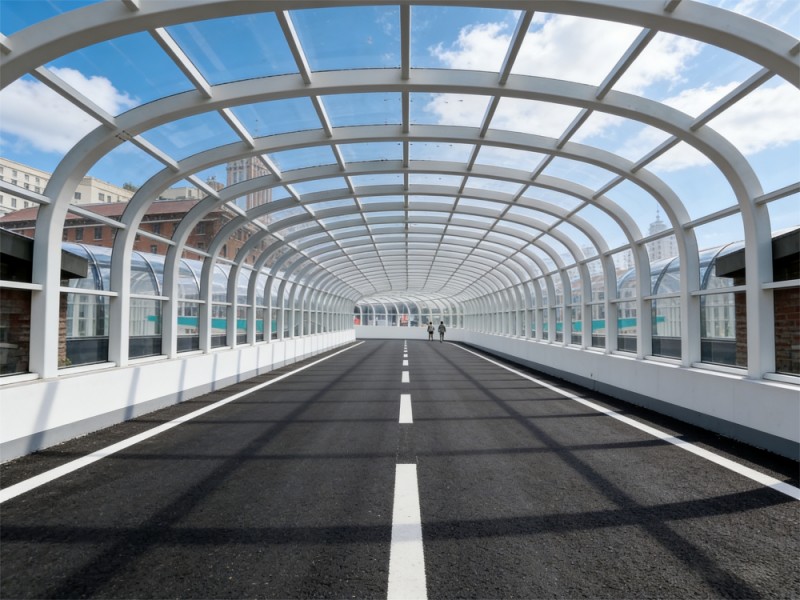
Polycarbonate Solid Sheet Application in Noise‑Reduction Walls and Sound Barriers
Transparent Polycarbonate Solid Sheet sound barriers are noise‑reduction facilities manufactured from high‑performance engineering plastics. They are widely deployed along highways, bridges, railways and residential districts. These barriers work by reflecting, transmitting and diffracting sound waves to mitigate noise pollution. They effectively cut traffic‑generated noise and safeguard decent living, learning and working environments for urban communities. Featuring an elegant appearance, they blend harmoniously with surrounding landscapes. This article analyzes the strengths and weaknesses of Polycarbonate Solid Sheet when used for sound barrier projects.
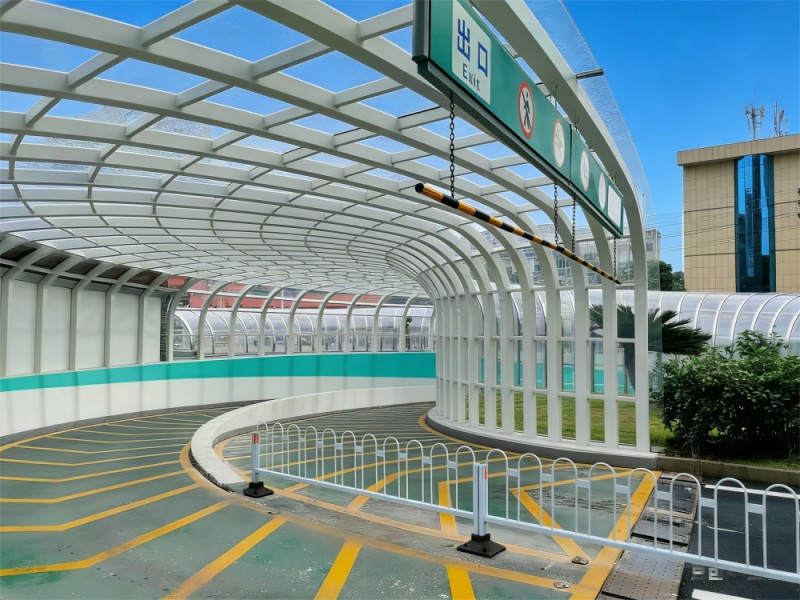
Advantages of Polycarbonate Solid Sheet for Sound Barrier Applications
- Superior impact resistance: Its impact strength is 250‑300 times that of glass of equal thickness, 30 times higher than acrylic sheet, and 2‑20 times greater than tempered glass. A 3‑kilogram hammer dropped from a height of 2 m will not crack the sheet, earning it the nickname “unbreakable glass”.
- Lightweight property: It weighs half as much as glass of identical thickness, lowering costs for transportation, handling and supporting frame structures.
- Excellent sound‑insulating performance: It outperforms glass and acrylic sheets at the same thickness in noise attenuation. Under equivalent‑thickness conditions, Polycarbonate Solid Sheet delivers 3‑4 dB higher sound insulation than glass, making it an ideal material for highway transparent sound barriers.
- High light transmittance: Light transmission reaches up to 85 %, comparable to glass.
- Flame‑retardant performance: Certified as Class‑B1 flame‑retardant per Chinese national standard GB50222‑95. Its ignition point stands at 580 ℃. It self‑extinguishes once removed from fire sources, releases no toxic fumes during combustion, and does not facilitate fire spread.
- Robust weather resistance: Polycarbonate Solid Sheet remains free from cold brittleness at ‑100 ℃ and softening at 120 ℃, with no notable degradation of mechanical properties under harsh conditions. After 4000‑hour artificial weathering testing, its yellowing index registers at 2, while light transmittance drops merely by 0.6 %.
Disadvantages of Polycarbonate Solid Sheet for Sound Barrier Applications
- Low surface hardness: The surface is prone to scratches. Do not stack sheets directly on cement floors; avoid contact with sharp or hard tools that may scratch panel surfaces.
- Limited chemical corrosion resistance: Long‑term exposure to acidic or alkaline environments will trigger material degradation.
- Risk of recycled‑material counterfeits: Sheets blended with recycled polycarbonate raw material suffer unreliable anti‑aging performance and may degrade within two to three years.
Key Technical Note
Always select Polycarbonate Solid Sheet manufactured with double‑sided anti‑aging UV‑coating. Sound barriers endure long‑term solar irradiation. Without double‑sided UV protection, panels will degrade within 2‑3 years. Aoz Polycarbonate Solid Sheet adopts virgin polycarbonate raw material together with double‑sided UV co‑extruded coating, which fundamentally solves ageing risks and guarantees overall sound‑barrier system quality.
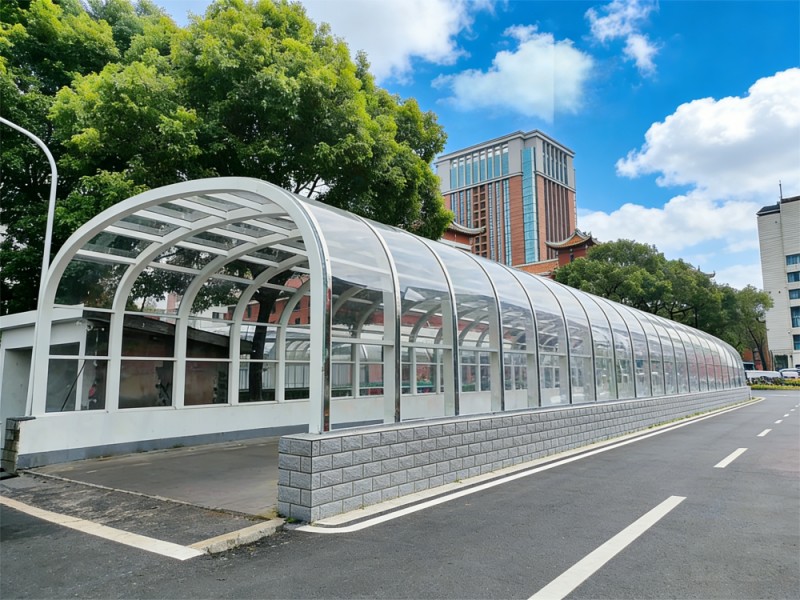
1. Core Considerations for Sound‑Barrier Material Selection
With rapid urbanisation and expanding transportation networks, noise pollution has become a critical factor affecting public quality of life. For sound barriers installed beside expressways and urban light‑rail transit lines, material selection directly determines noise‑reduction performance and project expenditure. Mainstream sound‑barrier materials on the market include Polycarbonate Solid Sheet, glass and metal panels. This paper compares sound‑insulating capacity, physical properties and practical‑project performance among the three materials to deliver reference data for sound‑barrier engineering.
Material selection for sound barriers requires comprehensive evaluation of multiple indicators: sound‑insulating capability, physical durability, weathering resistance, safety, installation convenience and overall cost. Sound‑insulating performance constitutes the core evaluation metric, quantified by sound‑reduction value measured in decibels (dB). In accordance with the Code for Sound Insulation Design of Buildings (GB 50118‑2025), sound barriers alongside traffic arteries generally need to achieve 25‑35 dB sound attenuation.
2. Comparative Analysis of Sound‑Insulating Performance of Three Materials
2.1 Sound‑insulating Performance of 6 mm Polycarbonate Solid Sheet
Polycarbonate Solid Sheet is an engineering plastic panel produced mainly from polycarbonate raw material with comprehensive outstanding properties. Test results verify its remarkable performance in sound‑barrier applications, outperforming glass and acrylic sheets of equal thickness.
A 6 mm Polycarbonate Solid Sheet delivers an average sound‑reduction capacity of 35 dB, capable of blocking most traffic noise and bringing highway noise down to acceptable ambient levels. Its sound‑insulating mechanism relies on its high‑density structure (density ≈ 1.2 g/cm³), which reflects and absorbs sound waves to suppress noise propagation.
In real‑world deployment, 6 mm Polycarbonate Solid Sheet achieves prominent attenuation for medium‑and‑high‑frequency noise such as car horns and mechanical roars. Optimised structural design also brings satisfactory absorption effects for challenging low‑frequency noise, enabling comprehensive noise control and rendering it an ideal candidate for sound‑barrier construction.
2.2 Sound‑insulating Performance of Glass Panels
As a conventional building material, glass is widely utilised in sound‑barrier construction. Test data show that 6‑8 mm ordinary glass provides 28‑30 dB sound insulation, effectively mitigating roadway traffic noise.
When glass thickness increases to 10‑12 mm, sound‑reduction performance rises to 30‑35 dB, comparable to noise levels inside a quiet library. Laminated glass further improves noise‑blocking performance: 5+5 mm or 6+6 mm laminated glass achieves 35‑40 dB sound reduction. For projects requiring superior noise attenuation, laminated insulating glass delivers 45‑50 dB sound insulation, largely masking vehicle horn noise and human speech. Nevertheless, ordinary glass remains widely adopted considering practical‑project budgets and functional requirements.
2.3 Sound‑insulating Performance of Metal Sound‑Barrier Panels
Metal panels (galvanised steel, aluminium alloy etc.) feature high density and favourable sound‑insulating properties. A 3 mm metal panel achieves weighted sound‑reduction (Rw) of 30‑40 dB. When assembled with a 100 mm sound‑absorbing layer, the composite structure delivers 25‑35 dB insertion loss against traffic noise.
Performance varies among different metal‑panel types. Single‑layer metal panels reach approximately 42.6 dB sound insulation within the stable high‑frequency range. Free‑damped metal panels achieve 46 dB (7.9 % improvement over single‑layer panels), while constrained‑damped metal panels reach 50.4 dB (18.3 % improvement over single‑layer counterparts).
2.4 Direct Performance Comparison of Three Materials
| Material Type | Thickness | Average Sound Reduction (dB) | Optimal Sound‑Frequency Range | Difference vs 6 mm Polycarbonate Solid Sheet |
|---|---|---|---|---|
| Polycarbonate Solid Sheet | 6 mm | 35 | Full frequency range, especially medium‑high frequency | Reference benchmark |
| Ordinary Glass | 6 mm | 28‑30 | Medium‑high frequency | 5‑7 dB lower |
| Ordinary Glass | 10‑12 mm | 30‑35 | Medium‑high frequency | Comparable |
| Metal Panel | 3 mm | 30‑40 | Medium‑high frequency | Comparable |
Under identical‑thickness conditions, Polycarbonate Solid Sheet offers 3‑4 dB higher sound insulation than glass; some test records indicate gaps of 5‑9 dB depending on experimental conditions, demonstrating its acoustic advantage. Its sound‑insulating capacity is broadly comparable with 3 mm metal panels. For this reason, mainstream sound‑barrier structures adopt metal frames paired with Polycarbonate Solid Sheet as a replacement for glass infill panels.
3. Physical‑property Comparison of Three Sound‑Barrier Materials
Beyond acoustic performance, physical characteristics heavily influence material selection. This section compares weight, impact safety, light transmittance and weather‑resistant performance.
3.1 Weight Comparison
- Polycarbonate Solid Sheet: Low density of 1.2 g/cm³; 6 mm sheet weighs 7.2 kg per square metre.
- Glass: Density 2.5 g/cm³; 6 mm glass weighs 15 kg per square metre, more than twice the weight of equivalent‑thickness Polycarbonate Solid Sheet.
- Metal panel: Density varies by alloy. Taking steel as an example, 1 mm steel plate weighs 7.8 kg per square metre, far heavier than both Polycarbonate Solid Sheet and glass.
Polycarbonate Solid Sheet weighs merely half of glass and roughly one‑fifth of steel. This lightweight trait reduces transportation workload, simplifies on‑site installation and lowers structural‑load requirements. For viaduct and light‑rail overpass projects with strict load‑bearing constraints, it cuts structural‑engineering costs significantly. Consequently, standard sound‑barrier solutions use metal frames fitted with Polycarbonate Solid Sheet instead of glass.
3.2 Strength and Safety Comparison
- Polycarbonate Solid Sheet: Exceptional impact resistance: 250‑300 times stronger than ordinary glass, 20‑30 times stronger than acrylic sheet and twice the performance of tempered glass. It barely fractures under real‑world impact scenarios. A 3‑kg hammer dropped from 2 m height will not produce cracks, earning it reputations as “unbreakable glass” and “transparent steel plate”. Even under extreme failure conditions, it produces no sharp fragments, eliminating secondary‑injury hazards.
- Glass: Ordinary glass breaks easily with notable safety risks. Although tempered glass improves impact resistance, it still falls far behind Polycarbonate Solid Sheet and may produce sharp shards upon fracture.
- Metal panel: High mechanical strength. 1.0‑1.6 mm galvanised steel panels with stamped reinforcing grooves can resist typhoons up to Force 10‑12 and withstand surface pressure of 300 kg/m².
Thanks to outstanding impact‑resistance performance, Polycarbonate Solid Sheet delivers superior safety for roadside sound‑barrier applications exposed to flying‑object impacts.
3.3 Light‑transmittance Comparison
Light‑transmitting performance matters for projects preserving natural daylight and visual openness.
- Polycarbonate Solid Sheet: Light transmittance above 85 %, comparable to glass. Clear or frosted variants are available to satisfy both noise‑reduction and daylighting requirements for highways and viaducts.
- Glass: Light transmittance exceeds 90 %, delivering superior visual clarity.
- Metal panel: Naturally opaque. Custom louver‑style structures can achieve partial light transmission at the cost of reduced acoustic performance.
Polycarbonate Solid Sheet and glass both satisfy daylight‑transparent requirements, while metal panels face inherent limitations in this regard.
3.4 Weather‑resistant Performance Comparison
Weather resistance determines service lifespan under outdoor exposure.
- Polycarbonate Solid Sheet: Requires dedicated UV‑protective treatment. It maintains stable mechanical performance from ‑100 ℃ to 120 ℃. After 4000‑hour accelerated weathering testing, the yellowing index is 2 and light‑transmittance loss is only 0.6 %. A co‑extruded anti‑UV surface layer suppresses UV‑triggered resin yellowing.
- Glass: Excellent inherent weather resistance; thermal‑expansion‑induced fracture risk exists under drastic temperature swings.
- Metal panel: Service life depends on surface treatment. Untreated metal corrodes easily; galvanised and sprayed anti‑corrosion metal panels resist obvious corrosion and deformation for over 15 years.
Overall, glass delivers natural weather‑resistant superiority. Properly UV‑coated Polycarbonate Solid Sheet achieves long‑term outdoor durability.
3.5 Fire‑resistant Performance Comparison
Fire‑safety performance is essential for public‑infrastructure material specification.
- Polycarbonate Solid Sheet: Ignition point 580 ℃, Class‑B1 flame‑retardant per GB50222‑95. It self‑extinguishes away from ignition sources, releases no toxic combustion gas and does not accelerate fire spread.
- Glass: Non‑combustible material with reliable fire‑safety properties.
- Metal panel: Non‑combustible itself yet prone to high‑temperature deformation that compromises sound‑barrier functionality. Metal‑panel systems are normally assembled with fire‑resistant filling materials such as rock wool to boost overall fire‑safety performance.
All three materials possess basic fire‑safety attributes, yet Polycarbonate Solid Sheet ranks relatively lower in comprehensive flame‑retardant performance.
4. Practical‑project Application Analysis of Three Sound‑Barrier Materials
4.1 Polycarbonate Solid Sheet in Sound‑Barrier Engineering
Benefiting from balanced acoustic and physical properties, Polycarbonate Solid Sheet has gained broad sound‑barrier adoption. Test results confirm 35 dB noise attenuation capacity, outperforming alternative materials of equal thickness.
Typical application scenarios
- Highway sound barriers: 6‑12 mm Polycarbonate Solid Sheet serves as the preferred transparent panel for roadway noise‑reduction facilities and is widely adopted in multiple developed‑market regions.
- Urban light‑rail noise tunnels: Balanced light transmission and high impact strength maintain natural illumination alongside noise‑reduction functions.
- Viaduct sound barriers: Light weight minimises additional bridge‑structure load and simplifies on‑site construction.
- Railway sound barriers: 4 mm sheets satisfy basic requirements; thicker specifications are normally selected given intense railway‑noise levels.
Two mainstream installation approaches are available: embed‑frame mounting and direct screw‑fixing. Installers must reserve sufficient thermal‑expansion gaps to prevent panel deformation caused by temperature fluctuation.
4.2 Glass‑based Sound‑Barrier Applications
Glass remains in use for projects prioritising transparency and visual aesthetics.
- Landscape roadway sound barriers: Preserve visual continuity while mitigating noise.
- Commercial‑district sound barriers: Achieve visual coordination with surrounding architectural styles.
- Residential‑adjacent sound barriers: Reduce visual obstruction and oppressive feelings for nearby residents.
Laminated or insulating laminated glass is commonly deployed for enhanced acoustic performance. Ordinary monolithic glass is phased‑out gradually due to limited sound‑insulating capacity and safety defects. Glass installation demands specialised equipment and labour; its heavy weight raises structural‑support requirements and overall project costs.
4.3 Metal‑panel Sound‑Barrier Applications
Metal panels deliver high mechanical strength and stable acoustic performance.
- Highway sound barriers: Galvanised steel panels represent a mature mainstream solution.
- Industrial‑zone sound barriers: Tolerate heavy mechanical impact and harsh ambient conditions.
- Railway sound barriers: Demonstrate favourable low‑frequency‑noise suppression performance.
Composite constructions combining metal facades with sound‑absorbing infill layers prevail in practice. For instance, 3 mm galvanised steel with a 100 mm sound‑absorbing layer delivers 25‑35 dB insertion loss for traffic noise. Embedded or hanging installation methods are standard practice. Heavy panel weight raises structural‑framework requirements. Most finished projects adopt metal support frames infilled with Polycarbonate Solid Sheet instead of glass.
4.4 Real‑world Comprehensive Performance Comparison
- Noise‑reduction effect: 6 mm Polycarbonate Solid Sheet reaches 35 dB average sound reduction; ordinary glass 28‑30 dB; metal‑panel composite systems achieve 35‑40 dB.
- Installation convenience: Polycarbonate Solid Sheet ranks first for lightweight handling and easy cutting; metal panels require professional equipment; glass installation is most labour‑intensive.
- Durability: UV‑coated Polycarbonate Solid Sheet and anti‑corrosion‑treated metal panels both achieve service life above 15 years.
- Light‑transmittance: Polycarbonate Solid Sheet and glass deliver excellent transparency; bare metal panels are opaque.
- Aesthetic performance: Custom surface finishing and colour options are available for all three material families.
- Cost profile: Raw‑material cost: glass lowest, Polycarbonate Solid Sheet intermediate. Installation‑labour cost: Polycarbonate Solid Sheet lowest, glass highest.
5. Material‑selection Guidance for Sound‑Barrier Projects
Recommendations are summarised below based on noise‑reduction objectives, ambient conditions and special‑project requirements.
5.1 Selection by Noise‑attenuation Requirements
- High‑noise‑reduction scenarios: Expressways adjacent to residential zones, urban light‑rail transit.
Priority option: Polycarbonate Solid Sheet (35 dB sound reduction, superior comprehensive performance).
Alternative: Composite metal‑panel with sound‑absorbing infill (35‑40 dB, higher total expenditure). - Medium‑noise‑reduction scenarios: Remote‑section highways, industrial‑park boundaries.
Priority option: Glass (28‑30 dB, economical raw‑material cost).
Alternative: Composite metal‑panel systems (30‑35 dB, cost‑effective). - Low‑noise‑reduction scenarios: Countryside roads and minor traffic arteries.
Priority option: 3‑4 mm Polycarbonate Solid Sheet or glass (25‑30 dB, low‑cost).
Alternative: Ordinary metal panels (25‑30 dB, mechanically robust).
5.2 Selection by Ambient Environmental Conditions
- High‑temperature and high‑humidity environments:
Priority option: Polycarbonate Solid Sheet with stable physical performance.
Alternative: Anti‑corrosion treated galvanised‑steel or aluminium‑alloy metal panels. - Low‑temperature dry environments:
Priority option: Glass with stable low‑temperature‑environment performance.
Alternative: Polycarbonate Solid Sheet or treated metal panels. - Strong‑ultraviolet‑radiation exposure:
Priority option: Glass.
Alternative: Surface‑treated metal panels or laminated glass.
5.3 Selection for Special‑function Requirements
- Light‑transmittance requirement: Priority: Polycarbonate Solid Sheet or 6 mm laminated glass (transmittance ≥85 %). Alternative: Custom louver‑type metal‑panel structures.
- High‑safety‑requirement zones: Priority: Polycarbonate Solid Sheet with outstanding impact resistance. Alternative: Laminated glass or reinforced metal panels.
- High‑fire‑safety‑requirement zones: Priority: Metal‑panel systems paired with fire‑resistant sound‑absorbing filling such as rock wool.
- Aesthetic‑focused projects: Priority: Tinted Polycarbonate Solid Sheet or coloured glass for customised visual effects. Alternative: Colour‑sprayed anti‑corrosion metal panels.
5.4 General Comprehensive Recommendation
Considering acoustic performance, physical durability, safety, installation practicality and life‑cycle cost, Polycarbonate Solid Sheet represents the optimal solution for most traffic‑oriented sound‑barrier projects, especially for scenarios listed below:
- Projects requiring high‑level noise‑reduction performance
- Zones with strict public‑safety requirements
- Retrofit or new‑build sites with limited structural‑load capacity
- Barriers where visual transparency must be retained
- Engineering projects pursuing balanced life‑cycle cost‑performance
Glass or metal‑panel solutions may be adopted for special‑condition projects, while their respective limitations and risk points should be fully evaluated during design phases.
6. Conclusion
Comparative research targeting 6 mm Polycarbonate Solid Sheet, glass and metal sound‑barrier panels yields the following conclusions:
- Acoustic performance: 6 mm Polycarbonate Solid Sheet delivers 35 dB average sound reduction, 3‑4 dB higher than glass of the same thickness and comparable with composite metal‑panel systems.
- Physical‑property performance: Polycarbonate Solid Sheet achieves balanced multi‑indicator performance. Its low weight and excellent impact‑resistance bring prominent advantages for installation safety and structural‑load control.
- Practical‑project deployment: Polycarbonate Solid Sheet is increasingly widely applied for highway, light‑rail and viaduct sound‑barrier systems. Real‑world engineering cases verify its reliable noise‑reduction capacity and convenient construction workflow.
- Cost‑performance: Evaluated covering raw‑material procurement, installation labour, service lifespan and maintenance expenditure, Polycarbonate Solid Sheet delivers competitive life‑cycle economic benefits.
In summary, Polycarbonate Solid Sheet exhibits prominent comprehensive advantages for sound‑barrier construction. It integrates reliable noise‑reduction capability, low weight, high impact strength, good light transmittance, qualified weather resistance and easy installation, satisfying diverse complex‑site engineering requirements. With continuous material‑technology advancement and accumulated field‑application experience, Polycarbonate Solid Sheet will capture expanding market share in sound‑barrier engineering and contribute to urban noise‑pollution abatement.
![[Calculator] PC Solid Sheet Weight & Volume](https://www.polyroofs.com/wp-content/uploads/2026/06/Polycarbonate-Solid-Sheet2.jpg)
![[Calculator] Wind and snow load](https://www.polyroofs.com/wp-content/uploads/2026/06/Polycarbonate-Canopy-Roof4.jpg)
![[Calculator] coefficient of linear expansion](https://www.polyroofs.com/wp-content/uploads/2026/06/Softlite-PC-Corrugated-Sheet1.jpg)