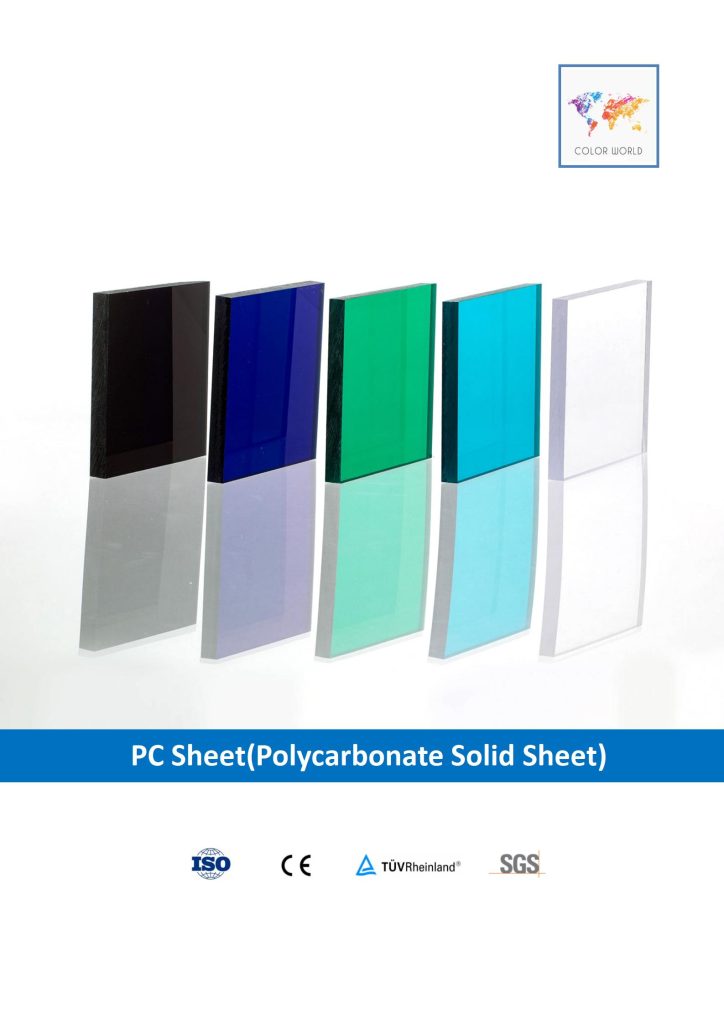
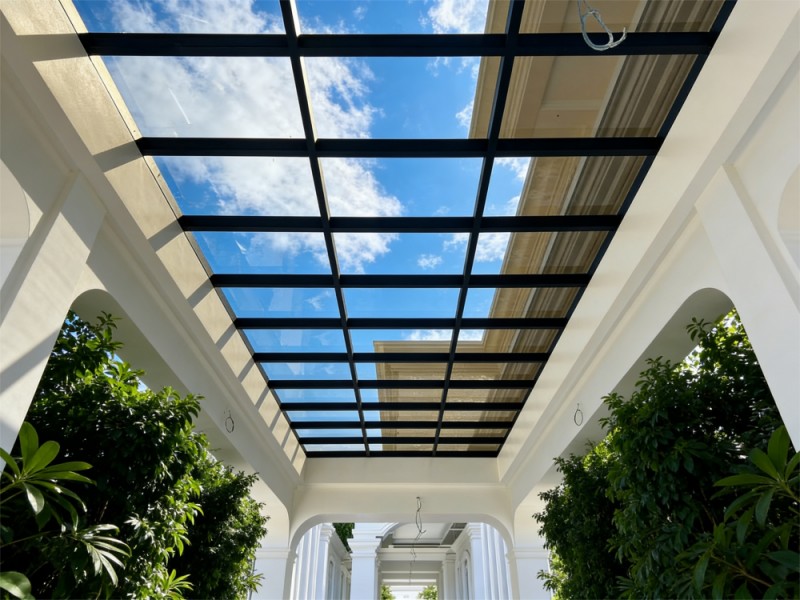
Transparent Canopy Panels: Polycarbonate Sheet vs PMMA Acrylic
Polycarbonate Sheet and acrylic look nearly identical. How should we choose when making outdoor canopies? First, we need to figure out which material performs better and understand the properties of both materials so that we can weigh pros and cons comprehensively and make a selection based on practical applications. Different panel thicknesses bring obvious differences in impact resistance, deflection under wind‑snow load and thermal expansion performance. Below is a detailed comparison of core parameters for commonly‑used 3 mm, 5 mm and 8 mm panels for canopy projects.
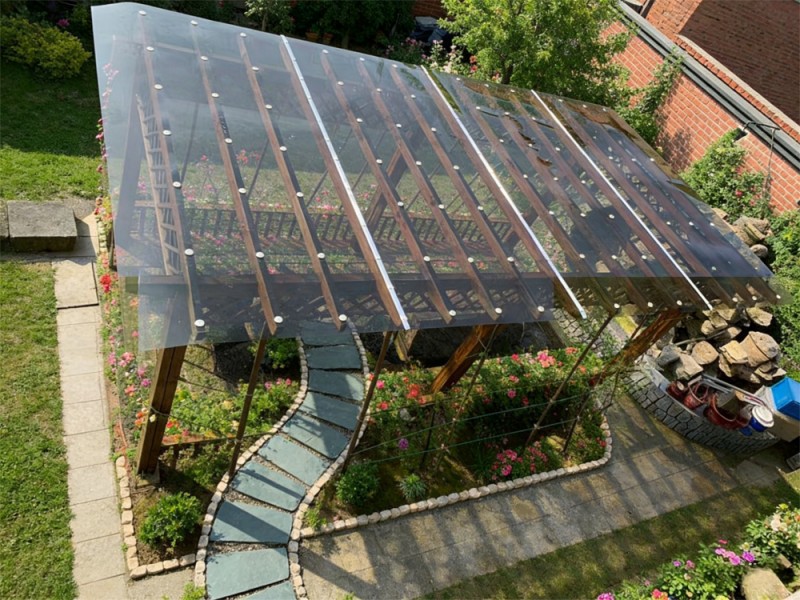
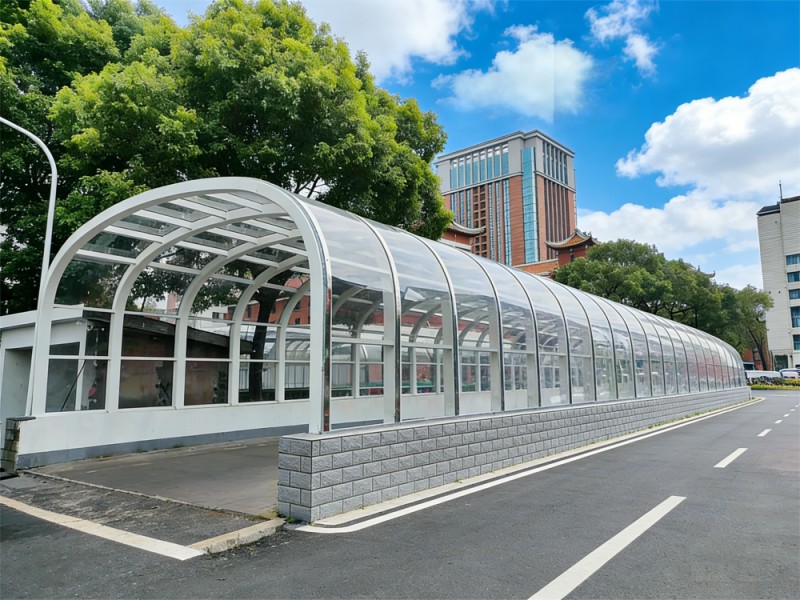
Canopies Made of Polycarbonate Sheet
Polycarbonate Sheet for canopies is extruded from polycarbonate‑based pellets. Aoz Polycarbonate Sheet features a co‑extruded 50‑micron double‑sided UV‑resistant coating. This protects the sheet from UV damage, slows ageing of the canopy, prevents yellowing and fogging, and delivers a service life of up to 15 years. It offers light transmittance of 85 % and certain self‑cleaning properties for easy maintenance.
Polycarbonate Sheet is extremely durable. Its impact resistance is 30 times that of acrylic glass, earning it the nickname “unbreakable glass”. Tested to reach fire‑retardant Class B1, it self‑extinguishes upon removal of flame and does not fuel fire spread. Its ignition point is 580 °C, and it releases no toxic fumes while burning. Within the temperature range of ‑40 °C to 120 °C, its mechanical properties remain stable for normal operation with good high‑temperature resistance.
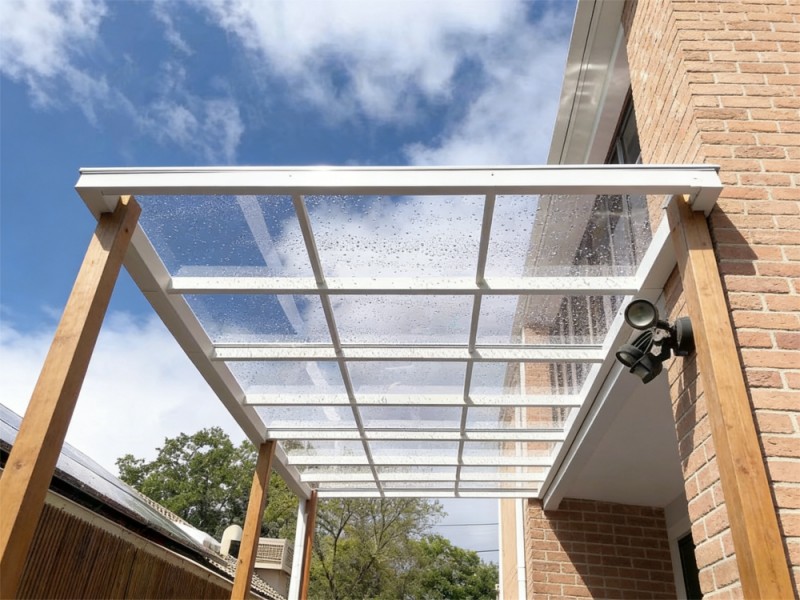
Performance parameters of Polycarbonate Sheet at typical thicknesses (3 mm / 5 mm / 8 mm):
- 3 mm Polycarbonate Sheet: Light transmittance 85 %; impact strength 85 kJ/m²; recommended maximum purlin spacing 0.6 m; weight 3.42 kg/㎡
- 5 mm Polycarbonate Sheet: Light transmittance 84 %; impact strength 92 kJ/m²; recommended maximum purlin spacing 0.8 m; weight 5.70 kg/㎡
- 8 mm Polycarbonate Sheet: Light transmittance 82 %; impact strength 105 kJ/m²; recommended maximum purlin spacing 1.1 m; weight 9.12 kg/㎡
Linear thermal expansion coefficient remains 6.5×10⁻⁵ /℃ across these thickness grades. Adequate expansion gaps must be reserved during installation to avoid cracking caused by thermal stress.
Canopies Made of PMMA Acrylic (Organic Glass)
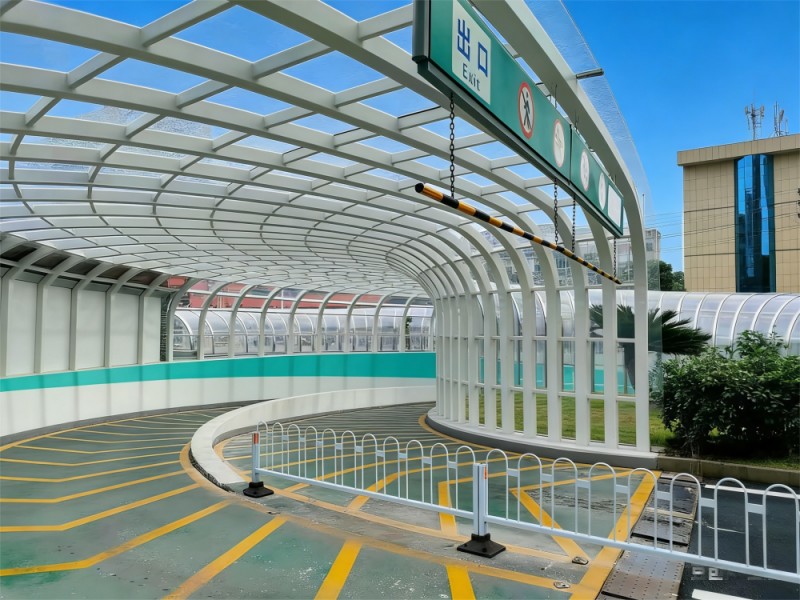
PMMA acrylic, also known as organic glass or acrylate, achieves light transmittance above 90 %, slightly higher than Polycarbonate Sheet. It has a smooth surface for easy cleaning and decent UV‑ and weather‑resistance to maintain performance under harsh outdoor conditions. Its service life reaches 10 years, whereas Aoz double‑sided UV‑coated Polycarbonate Sheet lasts up to 15 years.
PMMA acrylic has poor wear resistance and tends to scratch, which reduces brightness and transparency. It is not heat‑resistant and flammable, releasing toxic smoke when burning. Poor‑quality products may emit hazardous gases even in daily use. PMMA acrylic is vulnerable to organic solvents; contact with alcohol triggers chemical reactions and cracking. It is brittle with low impact resistance, prone to cracking, chipping and deformation, and far inferior to Polycarbonate Sheet in safety. Real‑world cases have shown that falling balcony flower pots were safely contained by Polycarbonate Sheet canopies thanks to their outstanding safety performance.
Performance parameters of PMMA Acrylic at typical thicknesses (3 mm / 5 mm / 8 mm):
- 3 mm PMMA Acrylic: Light transmittance 91 %; impact strength 3.2 kJ/m²; recommended maximum purlin spacing 0.4 m; weight 3.45 kg/㎡
- 5 mm PMMA Acrylic: Light transmittance 90 %; impact strength 4.0 kJ/m²; recommended maximum purlin spacing 0.55 m; weight 5.75 kg/㎡
- 8 mm PMMA Acrylic: Light transmittance 89 %; impact strength 5.1 kJ/m²; recommended maximum purlin spacing 0.75 m; weight 9.20 kg/㎡
Linear thermal expansion coefficient of PMMA acrylic is 7.0×10⁻⁵ /℃. Though similar in density to Polycarbonate Sheet, its low impact strength means thicker acrylic panels cannot achieve the anti‑shock performance of thinner Polycarbonate Sheet. Even 8 mm acrylic still remains brittle against falling objects and heavy hail.
Comparative Overview for Canopy Application
| Item | Polycarbonate Sheet | PMMA Acrylic |
|---|---|---|
| Typical light transmittance | 82‑85 % | 89‑91 % |
| Service life (outdoor UV‑protected) | Up to 15 years | Up to 10 years |
| Fire rating | B1 (self‑extinguishing) | Flammable |
| Ignition point | 580 °C | Around 460 °C |
| Impact‑strength reference | 85‑105 kJ/m² | 3.2‑5.1 kJ/m² |
| Working temperature range | ‑40 ℃ ~ 120 ℃ | ‑20 ℃ ~ 70 ℃ |
| Anti‑solvent property | Resistant to most daily solvents | Cracks upon contact with alcohol & many organics |
| Surface abrasion resistance | Moderate | Poor, easy to scratch |
Summary
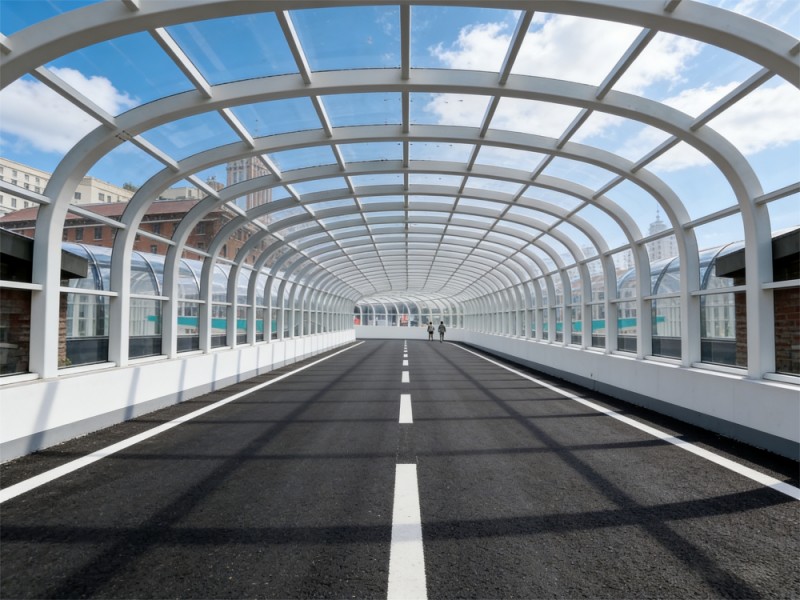
Visually, Polycarbonate Sheet canopies and acrylic canopies deliver nearly glass‑like transparency. Nevertheless, Polycarbonate Sheet outperforms PMMA acrylic in service life, impact resistance and flame‑retardant performance.
When selecting thickness for practical projects:
- For household small‑size door‑head canopies with small span: 3 mm‑5 mm Polycarbonate Sheet is widely adopted. If choosing acrylic, thicker 8 mm panels are required to reach basic structural safety, yet anti‑shock performance is still limited.
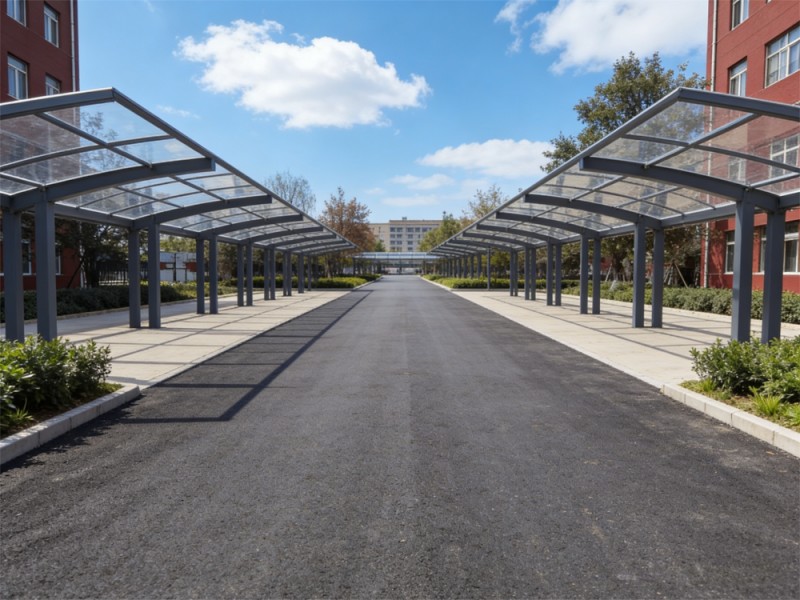
- For large‑span carports, public walkway canopies or hail‑prone regions: 5‑8 mm Polycarbonate Sheet is preferred for better wind‑snow load resistance and anti‑falling‑object safety.
For readers unfamiliar with these materials, this comparison provides practical reference information to support canopy‑material selection.
![[Calculator] PC Solid Sheet Weight & Volume](https://www.polyroofs.com/wp-content/uploads/2026/06/Polycarbonate-Solid-Sheet2.jpg)
![[Calculator] Wind and snow load](https://www.polyroofs.com/wp-content/uploads/2026/06/Polycarbonate-Canopy-Roof4.jpg)
![[Calculator] coefficient of linear expansion](https://www.polyroofs.com/wp-content/uploads/2026/06/Softlite-PC-Corrugated-Sheet1.jpg)